Evolution and Ecology of the Cichlid Family
Introduction
With roughly 3,000 known species of African Rift Cichlids in the world, they make up the largest family of vertebrates. African Rift Cichlids, or cichlids, are small to medium sized fish with bright colorations. These fish are believed to have evolved rapidly from a common ancestor based on how closely related each species is to one another.
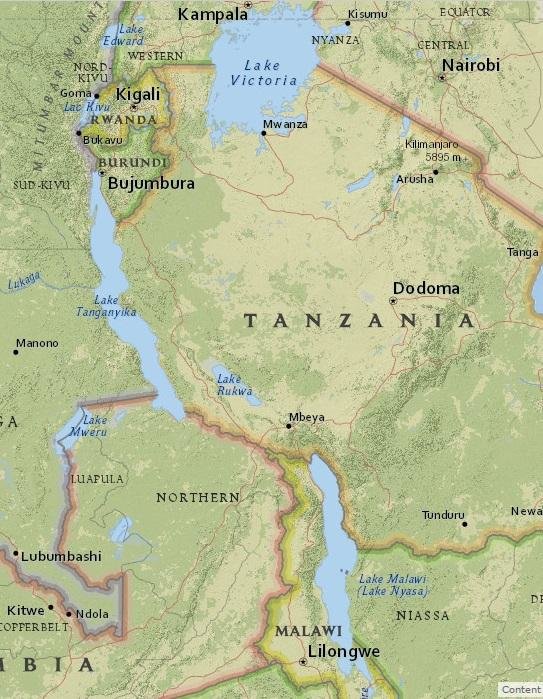
African Rift Cichlids, can be found in the Great Lakes of Africa. These lakes are located in the Great Rift Valley of Africa, and the three major lakes are lake Malawi, Victoria and Tanganyika. In Lake Malawi alone, there are roughly 850 known species of cichlids, these are the cichlids that we will be focusing on for the purposes of this blog. Lake Malawi is known to possess the most beautiful cichlids.
These hardy and highly adaptable fish typically live anywhere from 8-15 years depending on the breed. Their diet varies from small fish, plants and algae in the water, and detritus found on rocks and wood found in the water. They become very territorial during the mating season, where only the dominant male gets to breed. The other males, who do not share the alpha title, can be found near the edges of the alpha’s territory. These males keep their reproductive system suppressed enough to pass for a female, but are always ready to spring into action if the opportunity presents itself.
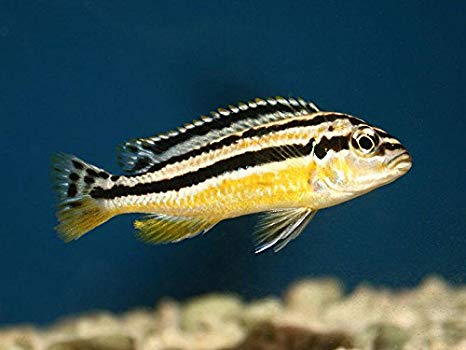
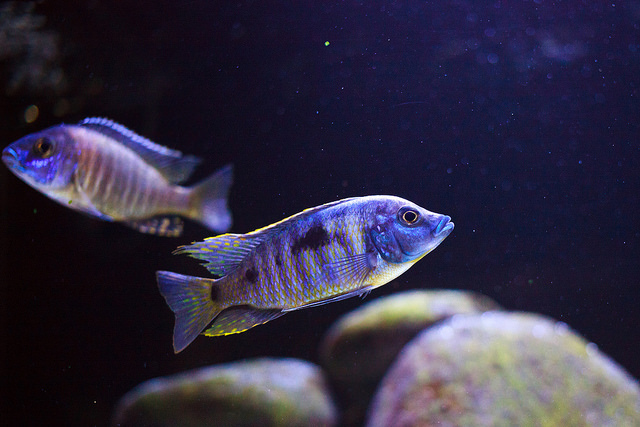
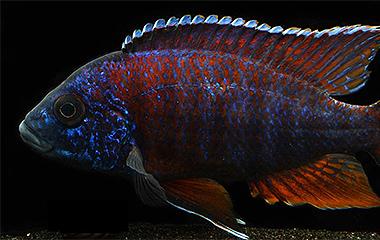
Shown above are some of the wide variety and vivid colors that can be found in the cichlid families.
January 27, 2020
Natural Selection (Blog Post #1)
Some of the phenotypic differences in closely related species of African cichlids can be attributed to natural selection. Some of these differences have diverse functions that can help with survival and reproduction. Other phenotypic characteristics such as jaw differences can also play a role in the place where the cichlid inhabits.
In terms of coloration there is a trade-off between attracting mates and attracting predators. The physics of light can have an impact on how aquatic animals find food, mates, and avoid predators. Sunlight, appearing to give off “white” light, is actually a combination of a spectrum of colors. When these colors pass through water, some colors of the spectrum disappear quicker than others. The first color to disappear when penetrating water is red, which loses ⅓ of its intensity after passing through one meter of water. For this reason, the coloration differences in African Cichlids can either be beneficial or detrimental to cichlids found at different depths.
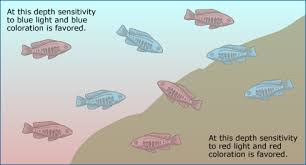
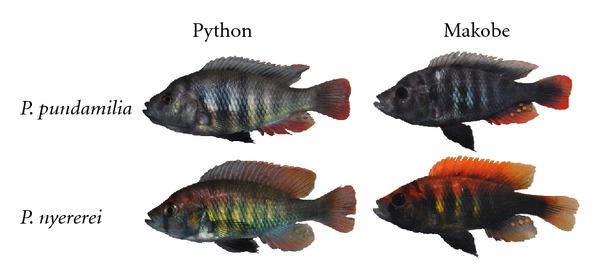
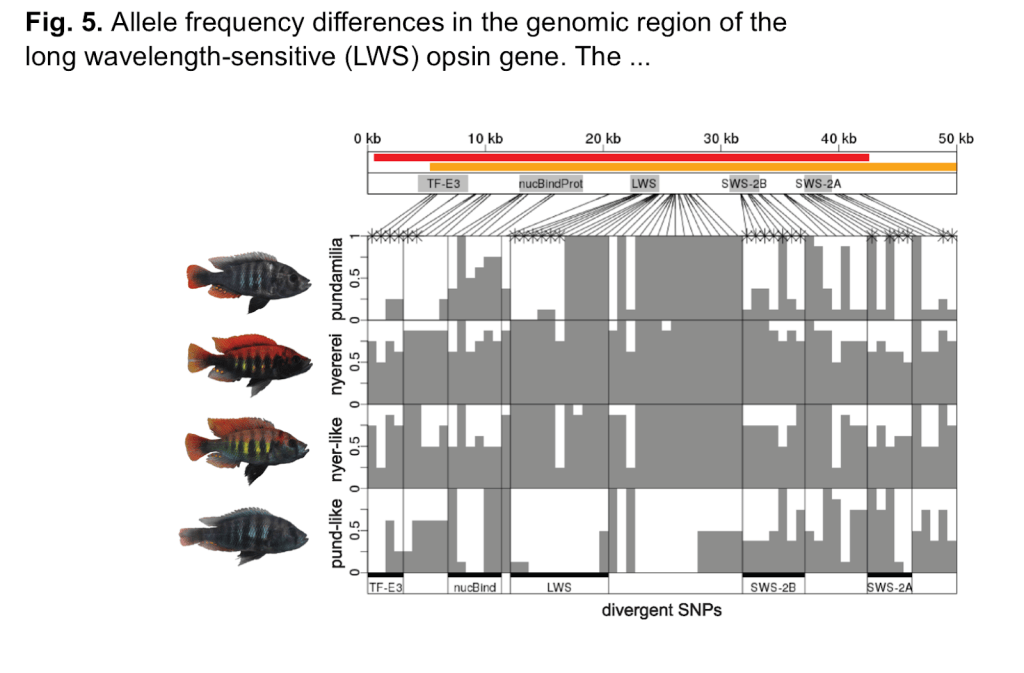
Females cichlids prefer males that appear brightly colored. For cichlids that are not brightly colored, finding a mate could be more of a challenge. Male coloration is a target of sexual selection by female mating preferences both at the intra- and interspecific levels in many African cichlid species. Those males that appear more brightly colored to females tend to reproduce at a greater rate. However, the differences in how males are perceived by females is not all due to the coloration of the male. In fact, some female cichlids have different color sensitivity genes which can make some colors appear brighter and more vivid than others. These differences in visual system properties, caused by differences in visual pigment alleles, result from adaptations to different light regimes. This can result in some species of cichlid having narrow parapatric depth ranges. An example of this can be seen between two cichlid species P. pundamilia (blue) and P. nyererei (red). P. nyererei (red cichlid) live in deeper waters than P. pundamilia (blue) and the light environment in deeper waters is red shifted which allows them to appear brightly to those with red light sensitivities (Maan et al. 2006; Seehausen et al. 2008). Because of this, sexual selection preferences arise which can lead to the initial stages of sympatric speciation and the formation of new species.
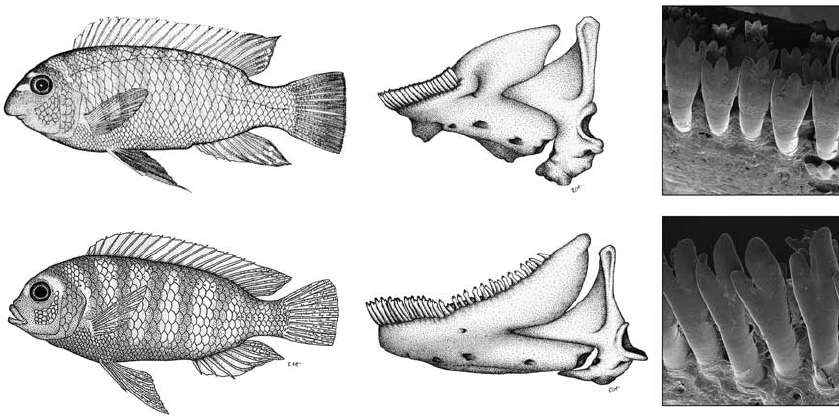
Both jaw and head shape in African cichlids can be attributed to natural selection. Cichlids generally feed one of three ways: bitting, suckleing and ram feeding. Based on the way that a particular cichlid eats has been shown to play a role in the type of jaw that cichlid will have. Ram feeders have long, streamlined heads optimized for pursuit and overtaking of prey. Both sucking and biting species have a short, cone-shaped head; however they differ at discrete anatomical points on the upper and lower jaw. Cichlids that feed by bitting have more of a short, robust, U-shaped oral jaw apparatus, an inferior subterminal mouth, and an outer row of closely spaced tricuspid teeth on both the upper and lower jaws; while, cichlids that feed by suckling have more of a long, narrower lower jaw, a terminally oriented mouth, and an outer row of widely spaced bicuspid teeth on both jaws. Jaw shape and the type of teeth cichlids have is also correlated with the specific foraging niches they are in, for example capturing prey or eating algae. A cichlids jaw, head shape, and teeth have evolved strongly in response to divergent selection.
February 13, 2020
Evolutionary Contraints (Blog Post #2)
One example of an evolutionary constraint among the Lake Malawi cichlids can be seen at the Ptch1 gene, which contributes to multiple jaw morphologies. At one extreme, individuals with one allele have very short retroarticular processes of the lower jaw, which allows them to rapidly rotate their jaw for suction feeding. At the other extreme, the retroarticular process is longer and stronger, optimizing the biting mode of feeding. Evolutionary constraints impact the deviation each extreme can reach, based on the available alleles for jaw shape. Individuals that are at the extremes of the spectrum have nearly fixed genotypes, indicating they have acquired the most prominent allele to maximize their phenotype. Until a new mutation pops up for a more extreme, better functioning genotype, each end of the spectrum has reached the evolutionary constraint for jaw morphology. Individuals in the middle of the spectrum, who have not reached either pole, have also been shown to possess more variation at the Ptch1 locus than individuals at either pole. These individuals do not yet have the optimum jaw shape, and have not yet reached the evolutionarily constrained phenotype.

Another example of an evolutionary constraint among African Cichlids is mouthbrooding. Mouthbrooding is the process in which females pick up and brood eggs and larvae in their mouth for a few weeks. This fascinating process occurs among all Cichlid species of lake Victoria and all except for one in lake Malawi and begins when the eggs are fertilized. Independent radiations within these separate lakes have produced very similar communities with similar reproductive and parental care strategies. These similar communities of African Cichlid, through their reproductive strategy, exhibit evidence of parallel evolution in which individuals independently evolve similar traits that started from a similar ancestral condition. The continuation and expansion of this reproductive strategy to nearly all species in these lakes is due to it having benefits on fitness.With most of the species of African Cichlid mouth brooding, the trait must be favorable to their fitness. In fact, African Cichlids that mouthbrood have a greater fitness than cichlids than those that do not. The reason behind this is increased protection of offspring from predators. The young inside the mother’s mouth are effectively shielded in a protective shelter. Mouthbrooding is also beneficial to the parents of the young because they do not have to guard a nest. However, an obvious downside of mouth brooding for the mother is that she is unable to eat because in doing so she could swallow the eggs/larvae or the eggs could escape/fall out when opening her mouth to feed. Because the young are protected in the mothers mouth, they are given a greater chance at survival than those that are not. Because of their greater chance of survival, the young of mouth brooders are more successful and have a better chance at survival and reproduction.

A third example of an evolutionary constraint among African Cichlids is the degree of sexual size dimorphism. Sexual size dimorphism requires that selection act differently on both sexes. In the Lamprologus callipterus family of cichlids sexual size dimorphism is the greatest recorded, where males are larger than females. Having a larger body size allows the males to move, carry and defend bigger Neothauma shells, in which they breed. Females tend to prefer to breed in large shells, so they often breed with larger males that have these larger shells as their home. If breeding takes place within a larger shell the reproductive success of that pair is much greater than that of a pair with a smaller shell. This in turn affects the overall fitness of both the female and males of larger sizes, because they are able to occupy larger shells and have more offspring. Selection has limited the size to which female Lamprologus callipterus cichlids can grow and has allowed for the males to become larger in size than females.
February 20, 2020
What is a Species? (Blog Post #3)
A species is a separately evolving metapopulation lineage where “separately evolving” refers to a group of individuals evolving together, yet separately from other individuals. There are 5 important species concepts that can help separate individuals into separate species. These species concepts are phylogenetic, ecological, morphological, biological, and unified. African Cichlids are model systems for evolutionary biology because many of these concepts can be applied to their very diverse lineage.
An example of the importance of the phylogenetic species concept is explained in a research paper investigating the phylogenetic and evolutionary patterns of African Cichlid fish and their monogenean parasites. Monogenea parasites are small parasitic flatworms that can usually be located on the skin or gills of the fish. The interesting relationship between these fish and their parasites can be uncovered using molecular data which consists mainly of sequences of DNA. The relationship between these parasites and their host is cospeciation, similar to the lice and gopher example discussed in class where the gopher’s own specialized lice splits when the gopher species diverges. A strength of this species concept is all that is needed to make a phylogenetic inference is molecular data which is easy to obtain from live specimens.
Another species concept that has been applied to Cichlids of lake Malawi is the biological species concept. This concept revolves around mating relationships and the ability of members of different populations to produce viable, fertile offspring. In this concept, there is absolutely no gene flow between populations that cannot mate, and each population is on a separate evolutionary trajectory. This concept can be useful with cichlids since there are many examples of pre-zygotic barriers to breeding that have arisen due to sexual selection and mating preferences. Despite being closely related, species that have different mating practices are isolated from gene flow. Despite its advantages and clearly defined boundaries, it is not so easy to put in practice. First of all, it cannot be used for fossils, so it cannot be used to accurately determine when two morphologically similar species diverged. In nature, it is also not very practical to observe a population for a long period of time and document who can and cannot mate (especially fish species deep beneath the surface).
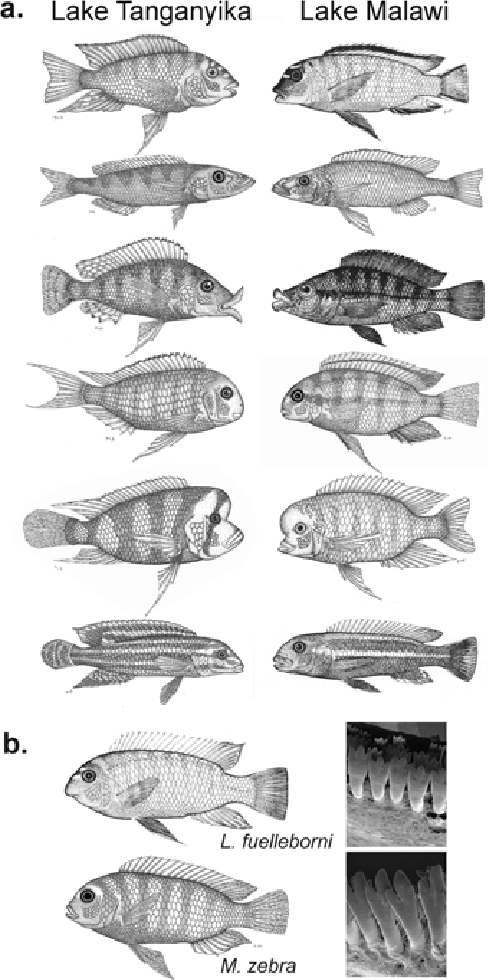
The morphological species concept also applies to African Cichlids. This concept is used to identify individuals of different species when there are distinguishable morphological features between them. In cichlids this concept is used to distinguish the morphological diversity between lake Malawi and Lake Tanganyika cichlids. Not only is there morphological diversity between the two lakes there is also morphological diversity within each lake, with there being more diversity in lake Tanganyika than lake Malawi. One example of morphological diversity between cichlids is that there are greater differences within the cranial region than the post cranial region, when comparing the two regions.
Cichlids that live in lake Malawi have a high diversity within the cranial region compared to cichlids in lake Tanganyika. On the other hand, lake Tanganyika cichlids have a high diversity within the post-cranial regions of their bodys, compared to lake Malawi cichlids. This is useful in two ways. One it can be useful to tell different species apart in the same lake, or in different lakes. This is achieved by looking at the cranial region or the post-cranial region of each cichlid.
African Cichlids are unique in the sense that they fit into so many of these categories that define a species so well. Whether it be biological concepts, phylogenetic concepts or anything inbetween. When dealing with the wrld of cichlids there are so many wild species and different species it is amazing they all came from the same ancestor. Ranging from types that eat algea to types that eat scales off of other fish, the diversity in species in the world is almost unmatched by any other species on the planet.
March 5, 2020
Adaptive Radiation (Blog Post #4)
Adaptive radiation refers to the rapid and simultaneous diversification of species and ecology. In order for a group to qualify for adaptive radiations, there are four features that need to be present within the group. These four features include common ancestry, phenotype-environment correlation, trait utility, and rapid speciation. Adaptive radiations are essential for understanding how ecological forces can drive evolutionary diversification and shape the way species interact with their environments. African cichlids are among the most well known cases of adaptive radiation because a single lineage has diverged and diversified into many ecological varied species in a short amount of time. Below, each of the four features of an adaptive radiation are explained in relation to African cichlids.
Common ancestry, one of the four essential features, is essential for a group to qualify as an adaptive radiation. All of the lineages that have diverged must have diverged from a single lineage or ancestor. African cichlid fishes of Africa’s Lake Victoria region house more than 700 diverse species that all evolved in the last 150,000 years. The most recent research has shown that the ancestor to modern African cichlids was actually a mixture of two different ancestors from different parts of Africa. It is thought that during a wet period, a Congolese lineage colonized the lake Victoria region and encountered cichlids from an upper Nile lineage. This hybrid population then rapidly diversified through adaptive radiation into hundreds of new species of different phenotypes, specializations, and niches.

Another essential feature of Adaptive Radiation is rapid speciation. Although there is not set rule for an exact speciation rate, speciation must happen more rapidly than seen in a similar, related lineage. Among all of the East African Great Lakes the speciation rate is the fastest recorded vertebrate radiation, with an estimated 2,000+ species showing up in the last 10 million years. This includes radiations in Lakes Tanganyikan, Victoria, and Malawi, among others as well. With such a high speciation rate, likely due to all of the available niches, African cichlids check off this feature of an adaptive radiation.
Trait utility is another one of the four essential features that is critical for a group to be considered as an adaptive radiation. Trait utility is the fitness advantages that come from having those specific traits in that particular environment. An example of trait utility in African Cichlids is male nuptial coloration, especially in the haplochromine cichlids of Lake Victoria. The appearance and frequent changes in male nuptial coloration in African cichlids is associated with the evolution of polygynous mating systems that would allow for stronger sexual selection. It was found that closely related species of haplochromines typically have very similar morphologies and ecologies; however, they differ strikingly in coloration, with this variation affecting interspecific mate choice. It was also found that redness of males is an important criteria for females when choosing a mate. Male coloration in African Cichlids is an example of trait utility, within the species. Trait utility is about enhancing fitness and being a red male in this case will definitely help that male mate with more females and therefore increase his overall fitness.
Finally, cichlids have an excellent phenotype-environment correlation. Certain species of cichlids have adapted to their environment in such a way to eat algae or even pull the sick scales off of other fish in their area. This unique adaptation has made cichlids a prime example of adaptive radiation. The diversity of “jobs” in this species is almost limitless. Their specialized jaw shape and fin orientation makes them perfect as a representation of phenotype-environment correlation.
As far as adaptive radiation goes cichlids are one of the most incredible species to study in this area. Due to their extreme rapid speciation and the common ancestor that they have, they fit the bill of an adaptive radiation family perfectly. They also have supreme use of trait utility because of their wide diversity of functions in their ecosystems. All of these factors and their phenotype-environment correlation makes them an optimal species in the study of adaptive radiation.
March 9th, 2020
Phylogenies (Blog Post #5)
Phylogenies show the evolutionary history of an organism or related group. A phylogenetic tree is a useful way to represent these evolutionary relationships, and gain a clearer understanding of where the organism of group came from. There are multiple ways of building a phylogeny, and in this modern age, tree building techniques have become more sophisticated than ever. Using ‘likelihood’ methods and the law of parsimony, researchers can unlock the most likely phylogeny for a particular group. This tree can then be used to answer various questions about where traits came from and how they relate to relatives based on where they fit into the tree.
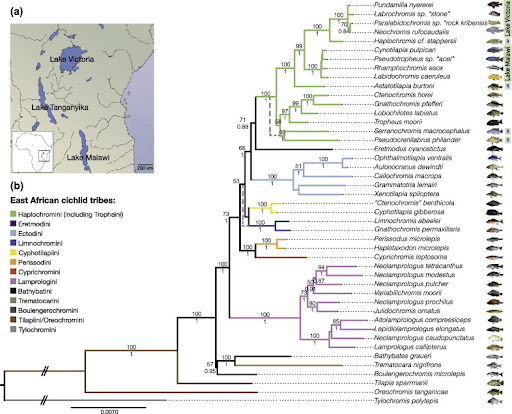
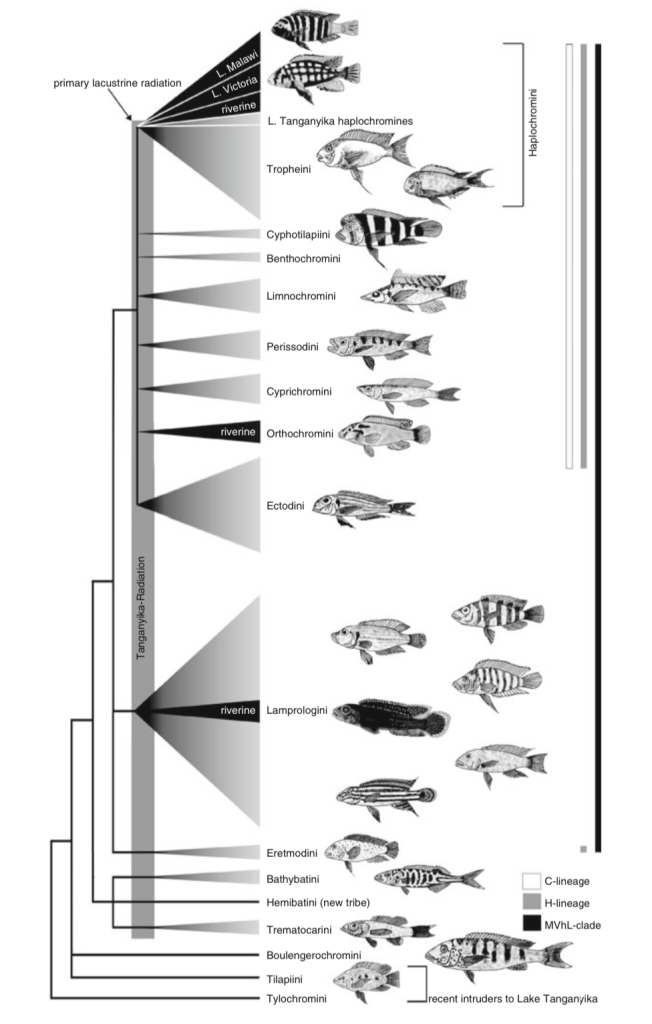
In order to have a baseline understanding of a group’s evolutionary history, it is helpful to know some background information of when and where the ancestors of that group existed. The African great lakes in which African cichlids are found are actually different ages. Lake Tanganyika is the oldest which began to form between 9 and 12 million years ago, lake Malawi began to form 2 million years ago, and lake Victoria formed about 12,400 years ago. This is interesting to think about because each group of cichlids from their respective lakes are of different ages although each group has seemingly arisen in situ in each lake after it was formed. The remarkable thing about this is the speed with which adaptive radiation generated the numbers of new species that each diverged from a common ancestor in their original lakes. Since lake Tanganyika is the oldest lake, it is believed that the cichlids reached lake Malawi and Victoria through river drainage systems. The exact evolutionary history is not known for certain by the phylogenetic tree below is thought to be the most correct and was created using nuclear and mtDNA markers.
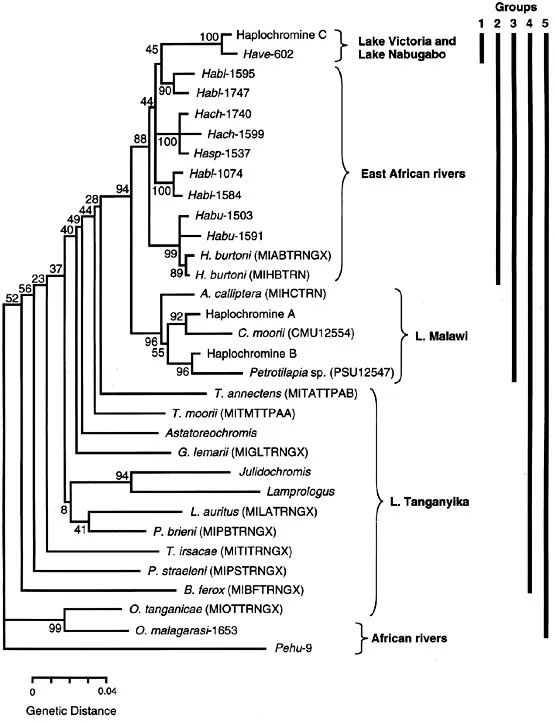
Afircan Cichlids that are found in smaller crater lakes of Africa, are an example of a monophyletic group within African Cichlids family. Crater lakes Barombi Mbo and Berimin, are home to 11 and 9 endemic species of cichlids, respectively. It is thought that the cichlids in each lake are a monophyletic group, and that each lake was colonized once and that different factors in each lake lead to sympatric speciation. Each species in each lake was found to have different morphologies from each other. Also no hybrids were found within each lake suggesting that the different species do not interbreed making them their own species. Through the use of mitochondrial DNA from each of the 20 species, it was determined that there was a common ancestor of the cichlids inhabiting these crater lakes, since all of the cichlids were found to be of the tilapia-like line of cichlids.
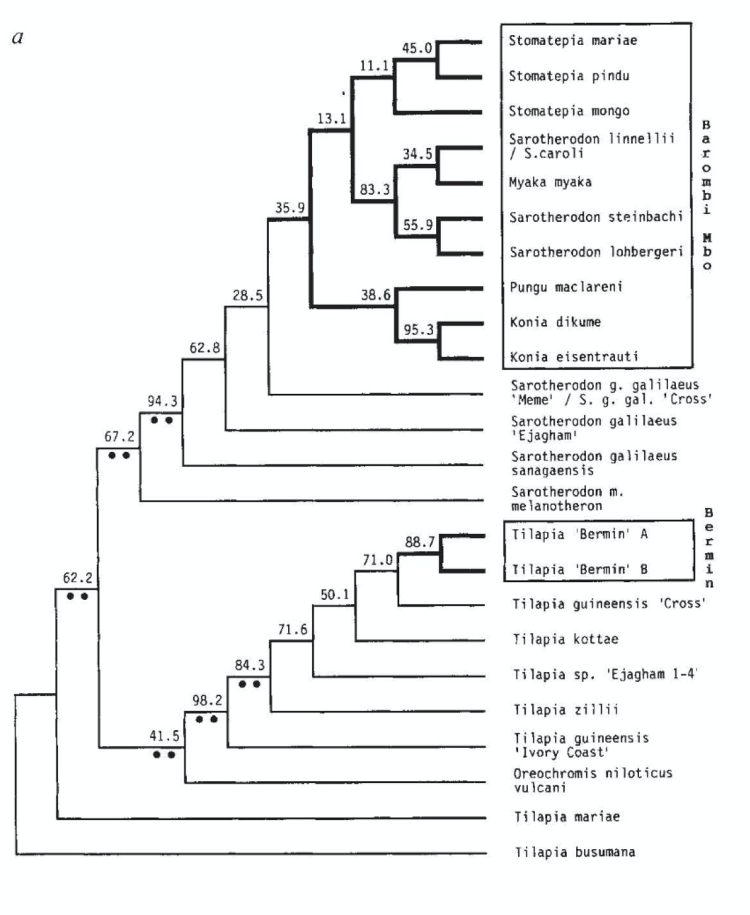
Afircan Cichlids that are found in smaller crater lakes of Africa, are an example of a monophyletic group within African Cichlids family. Crater lakes Barombi Mbo and Berimin, are home to 11 and 9 endemic species of cichlids, respectively. It is thought that the cichlids in each lake are a monophyletic group, and that each lake was colonized once and that different factors in each lake lead to sympatric speciation. Each species in each lake was found to have different morphologies from each other. Also no hybrids were found within each lake suggesting that the different species do not interbreed making them their own species. Through the use of mitochondrial DNA from each of the 20 species, it was determined that there was a common ancestor of the cichlids inhabiting these crater lakes, since all of the cichlids were found to be of the tilapia-like line of cichlids.
Using knowledge of geological history to determine the age of each lake, as well as DNA markers within cichlid species, phylogenies can be created and used to understand relationships among many different cichlid species. With these tools, researchers can analyze how traits may have evolved within a group due to environmental pressures, or simply as a function of being closely related to other groups with that trait. Using phylogenies, researchers can better understand the interaction between ecological pressures and genetic relationships among different groups of individuals.
March 12th, 2020
Predation and Herbivory (Blog Post #6)
Predation and Herbivory are factors that control the population abundances within a given area. African Rift Lake cichlids are no different; there are many species adapted for herbivory and there are also many carnivorous species adapted for eating small herbivores (mesopredators). Although much of what determines one particular species’ diet is jaw morphology, recent evidence points to particular genes impacting the appetite of different cichlid species. Ahi et al. (2020) analyzed the expression of 16 appetite related genes in both herbivorous and carnivorous species in lakes Tanganyika, Malawi, and Victoria. Across all three lakes, they discovered 2 genes (cart and npy2r) that were more heavily expressed in the carnivorous species. Who knew the types of foods cichlids munch on could be influenced by what they’re hungry for?
Cichlids are not the only animals out there looking for something to munch on. Numerous predatory fish, birds and other predatory animals like to eat fish, may snack on the occasional cichlid every now and then. However, cichlids have developed a way to mediate the risk of being eaten by using the cues left behind from consumed or damaged individuals among them. These cues in the water act as a source of information for both conspecific and heterospecific individuals that there is a predator nearby, and triggers a response in those individuals. Pollock et al. (2005) found that cichlids exposed to conspecific cues of damage respond by eating less and limiting their movement. They also found that cichlids exposed to these damage cues were smaller in overall size compared to cichlids that were not exposed to damage cues. Cichlids respond to the presence of predators in a number of ways. First they become less active and go into hiding making it more difficult for the predator to find them and eat them. They are also smaller in size making them not as beneficial of a meal to the predator compared to a larger cichlid.

In these Great Lakes of Africa, there are multiple strategies of survival in the face of dangers like predation. A study was done by Thompson (1999) simulating the Lotka-volterra model of both an r-selected and a k-selected prey group. The key factor is the rate of growth of the two groups. When the k-selected group is under a predation risk, the r-group can grow rapidly due to all of the available food; however when predation poses a smaller risk to the k-group, they experience a more rapid rate of growth. Understanding the Lotka-volterra models gives us a clearer understanding of a predator prey relationship and it can allow us to make predictions about what will happen given a certain set of circumstances.
May 1st, 2020
Competition (Blog Post #7)
Competition is defined as a negative interaction between individuals that depend on the same limiting resource to survive, grow, or reproduce. Limiting resources are ones that there is not enough for every individual to have enough of which results in one individual getting more, and another getting less. Some examples of limiting resources when it comes to ecology include food, water, space, and mates. Although these resources are limited, they are renewable but they take time to renew and replenish. In the meantime, while these limited resources are being utilized, the species that can persist using a smaller amount of the limiting resource will drive other species towards extinction because they are outcompeting them. In many species, there is male to male competition where males compete for the opportunity to mate with a female.
Male to male competition occurs between the small brightly colored males of haplochromine cichlids in Africa. For these species, male-male competition is thought to be important because ownership of a territory is a prerequisite to gain access to spawnings, which are the expelled gametes from the body into the surrounding water. Additionally, the quality of the territory can also have an affect on mate choice. If a male is able to acquire a territory but that territory is poor, that male will most likely not have pretty poor luck mating and reproducing compared to a male with favorable territory. When the male that chose the poor territory realizes he is not succeeding in impressing females with his territory and bright coloration, he is likely to go and compete with another male for their territory. Consequently, aggressive competition over territory is intense and is likely to have an affect on sexual selection. Male to male competition can also serve as a source of negative frequency-dependent selection in these cichlids because of stronger competition between same colored males as opposed to males of different colors. This is because competition is stronger among cichlid individuals that are the same color.

Nile Perch and Cichlid (Cichlid measuring about 4-10 inches).
Competition can also occur between individuals of different species which is known as interspecific competition. An example that has actually led to mass extinction of cichlids is the Nile perch that was introduced to Lake Victoria in the 1950s. The Nile perch caused a mass extinction of cichlids because they are able to feed much more rapidly than the cichlids. The Nile perch can feed more rapidly than cichlids that also eat other fish because cichlids have a specialized jaw structure which makes swallowing their prey take a long time. Since the prey items are the same between the cichlids that eat other fish and the Nile Perch, the Nile Perch was able to outcompete the cichlids for resources, leaving cichlids with less food/prey. The Nile Perch, as opposed to fish eating cichlids, has a large mouth and a large appetite. In fact, the Nile Perch has been labeled by biologists as a “classic example” of an invasive species which can, “literally eat up the biodiversity of an ecosystem”. Researchers have discovered that a Nile Perch can swallow a fish within a few minutes, and cichlids of the same size as the Perch take many hours to do so. Because of their advantages over fish eating cichlids, it is no surprise that the Nile Perch was able to outcompete cichlids and lead them towards a mass extinction.

Nile Perch
May 1st, 2020
Building Communities (Blog Post #8)
A community is defined as the assemblage of a species living together in a particular area. Communities are built through the process of succession and the process can be split into different stages called seral stages. The first stage, and most important, is when the primary species, first species to occupy the community, arrives. This is followed by more species finding this new community and ends when the community is at climax or the final seral stage.

Cichlids are a great example of a community, more specifically a speciose community. In Lake Malawi there are more than 700 species of cichlids, resulting in highly diverse cichlid species communities within the lake, as seen in rock-dwelling cichlids. When observing 82 communities, there were a total of 54 rock-dwelling species found belonging to 12 genera. In one community a total of 15 cichlid species were found, and in another community only 2 species were found. The number of species found in each community relies on the distance between each community and the environment differences in each. It was found that across small distances, of less than 4km, the dissimilarity within communities increased with distance. It was also found that in communities widely spread out distance wasn’t a factor in the dissimilarities within those communities. The environment within each community was found to be different. The types of rock structures, and food availability differed within each community.
Species within a community come and go. While in a community those species interact with each other all the time. These interactions among species can have different results. The presence of one species in a community can either increase or decrease the likelihood of another species joining that community. An example of cichlids decreasing the likelihood of another species becoming established in a community can be found in the Florida Everglades, where cichlids can have a big impact on communities. In these communities cichlids are a predator, consuming smaller fishes and crustaceans. In the experiments that were conducted, it was found that in tanks with cichlids, serving as non-native predators, there were definitely less abundance of smaller fish and snails and shrimp within the mock community. These tanks with the cichlids had far less biomass in them compared to the tanks with the native predators. The presence of cichlids in the Florida Everglades is impacting the presences of other species of fish and crustaceans in those waters.
May 1st, 2020
Species Introductions (Blog Post #9)
In certain environments one can find different organisms and species, in the Great Barrier Reef one might find clown fish or even Moray eels, in the Arctic maybe penguins or leopard seals. All of these species have one thing in common, they are native to the area in which they live. When a species is added to an area in which it is not native is is considered exotic or even an alien species. This introduction of species can be categorized as species introduction itself in which an outside species in brought into a new environement either on purpose or by accident. This event is ofter related to human transport or contact, spreading species where they are not supposed to be. These non native species can cause problems with existing species in the environement, even drawing some to extinction.
Specifically in relation to Lake Malawi, there are over 830 endemic fish species. In 2013 it was reported that two invasive species were introduced to the lake, Oreochromis niloticus and Oreochromis leucostictus. These two species are of the tilapia family and we introduced to the lake in order to influence the aquaculture and new capture fisheries. The first species Oreochromis niloticus (also know as the Nile Talapia which is in fact a type of cichlid) is known for being extermely competitive and a large predetor of native species to the lake. This species is also very capable of hybridizing with existing Oreochromis species and causing a loss of overll bio-diversity. Previously, this same species was found in Lake Victoria and eliminated most of any bio-diverstiy found in the Oreochromis species from that body of water.

Oreochromis niloticus (also know as the Nile Talapia)
These type of introductory species are very common around the world ranging from lion fish off the coast of Florida, to the dreaded Cane frog. Some of the species were transported and were originally imported to their exotic location in hope that they would eliminate pests but often times end up become the pests. In certain locations, such as Hawaii, the importing of certain species (in Hawaii’s case, any species of snake) is extremely illegal and individuals can actual serve jail time for their actions. Relating this back to cichlids, the invasive species now found in Lake Malawi are small in numbers now but overtime could prove to be deadly.
May 1st, 2020
Extinction (Blog Post #10)
Although many species extinctions can be traced back to natural causes such as ice ages, volcanic eruptions, and asteroids, the Cichlids of the African Rift Lakes have undergone a mass extinction because of the actions of humans. This is not the first time in our history that the intervention of humans has caused the decline and extinction of species and it will not be the last time. Around 11,000 years ago, the Glyptodon, a prehistoric megafauna mammal, went extinct after it was over hunted for its meat and for the use of its carapace as shelter. More recently, the cichlids of Lake Victoria in Africa have undergone a mass extinction which began in the 1950s after the introduction of the Nile Perch. The Nile Perch was introduced in order to boost the fishing industry. At first, this seemed great and it resulted in an economic boom but the consequences of introducing an invasive species had a drastic negative effect on the African cichlid population.

The Nile Perch is perhaps the great down fall of the cichlid species, due to its size, weight and most especially its ability to consume. In comparison to any cichlids or even neighboring fish the Nile Perch is the most deadly predator to anything the the remotely resembles a small brightly colored fish. Not only do they function as a preditor but they also outcompete the current cichlids While Nile perch can swallow a fish within a few minutes, cichlids of the same size take many hours to do so. What slows cichlids down is the second set of jaws at the back of their throat — the pharyngeal jaws — which originally enabled these species to exploit a wide range of food sources.
Due especially to this jaw feature the extinction of cichlids is very possible do to the Nile Perch. Simply adding this fish to boost the fishing industry has destroyed a species and even caused overgrowth of some algae and other plants (as cichlids can also eat plants). This shows the effects of species introduction and its inevitable cause… extinction.
May 1st, 2020
 African Cichlids